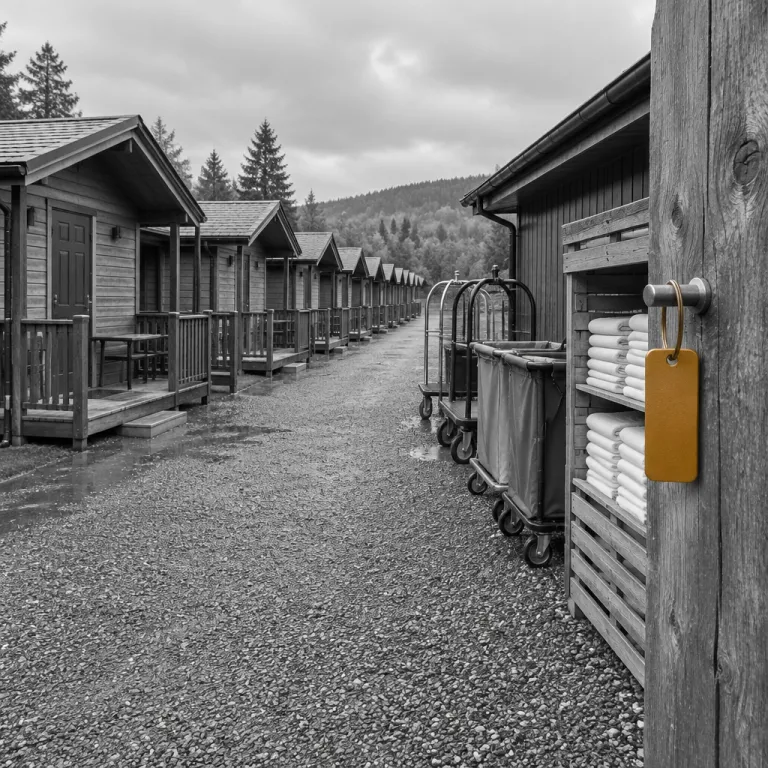
How cabin staffing shapes the stay you actually feel
When you book a mountain cabin, you see the view, not the rota. Yet the reality of cabin property manager staffing in 2026 is that your stay rises or falls on who can reach that ridge road after a storm. For luxury and premium cabin rentals, the invisible team behind the property has become the most fragile part of the promise.
Key Data’s Vacation Rental Industry Outlook reports that “Staffing shortages and revenue pressures are the primary challenges.” It also notes that “73% of property managers cite staffing and revenue pressures as a major barrier,” a figure drawn from professionals overseeing more than 43,000 properties across the United States. The report aggregates booking, occupancy, and performance metrics from professional vacation rental managers who opt in to share anonymised portfolio data. When you arrive at a Blue Ridge cabin with a hot tub already steaming and beds turned down with precision, you are feeling the impact of that staffing equation in real time.
Remote locations amplify the issue because the local labor pool is thin and seasonal. A single local expert cleaner in North Georgia might cover several cabin rentals scattered between Cherry Log hollows and higher ridge properties, stretching both time and quality service. For guests, this means that the same staffing shortage affecting property management and rental management can decide whether your great escape feels seamless or slightly frayed at the edges.
Why remote ridges make staffing the industry’s pressure point
Luxury cabins rarely sit beside a highway or a mall. They cling to a ridge above a blue sky valley, or hide along a log-lined creek near Cherry Log, where the road narrows and the phone signal fades. Those settings are precisely what make workforce planning for cabin managers in 2026 such a structural challenge for every management company operating in these landscapes.
In dense cities, a property management firm can draw from a wide pool of cleaners, maintenance technicians, and on-call concierges. In North Georgia’s Blue Ridge corridor, by contrast, a single local team may drive more than 50 kilometres between a featured vacation rental with six beds and a smaller log cabin rental with only two. Every kilometre adds cost, and every extra stop increases the risk that a hot tub is not balanced correctly or that property care checks are rushed before the next guests arrive.
Turnover is especially punishing in these remote markets because training a new hire on steep gravel drives, septic systems, and wood-burning stoves takes time. One North Georgia operator recently calculated that replacing a single experienced cleaner costs roughly $2,500 in recruitment, onboarding, and blocked nights. Their internal breakdown attributed about $900 to advertising and interviews, $600 to paid training shifts, and roughly $1,000 to lost revenue from nights blocked off while schedules were rebuilt. When a cleaner or groundskeeper leaves, the cost is not just recruitment but lost revenue from nights blocked off while management services scramble to rebuild the schedule. For travellers, that can translate into fewer available vacation rentals on peak dates and stricter minimum stays, as property managers protect their stretched teams.
Inside the turnover cost: cleaning, grounds, and emergency calls
Every time you check out of a cabin, a small operational ballet begins. Cleaning crews move in, linens rotate, hot tub water is tested, and a property care checklist runs from roofline to firepit. In the context of staffing for cabin property managers in 2026, each of these steps carries a measurable cost that shapes both nightly rates and the guest experience.
Cleaning is the most visible layer, especially in big vacation rentals where four or five beds, multiple bathrooms, and expansive decks must be reset in a narrow window. A management company might pay a premium to keep a stable team willing to handle steep driveways in winter and late evening turnovers, because losing them means scrambling with agency staff who do not know the property. Groundskeeping and log exterior maintenance add another layer, from clearing fallen branches on ridge access roads to checking that outdoor lighting and sky-facing cameras still link correctly to remote monitoring systems.
Emergency maintenance is the wild card that exposes how fragile staffing can be in remote real estate markets. When a water heater fails at midnight in a Cherry Log cabin rental, the difference between a local expert technician and a contractor driving in from a distant town is the difference between a minor inconvenience and a ruined guest experience. As one regional manager for a 60-cabin portfolio put it, “We budget more for a cross-trained local crew than for marketing, because a fast midnight fix protects reviews and owner income in a way no ad campaign can.” Property managers who invest in cross-trained local teams and clear rental management protocols tend to recover faster, protecting both reviews and long-term investment property value.
Tech, co-ops, and the new staffing playbook behind the scenes
To keep pace with cabin property manager staffing in 2026, serious operators are quietly rebuilding their playbooks. Smart locks and automated check-in systems now handle arrivals at many Blue Ridge properties, allowing guests to stay connected to support without waiting for a key handoff. Remote monitoring tools track hot tub temperatures, water leaks, and even power outages, so a lean local team can prioritise which cabin needs a visit first.
Co-operative staffing models are also emerging, especially where several management companies operate clusters of vacation rentals along the same ridge or valley. Instead of each property management firm running half-empty schedules, they share vetted cleaners and maintenance staff through structured agreements, often coordinated by an LLC that specialises in management services. For travellers, this behind-the-scenes collaboration means that a featured vacation rental from one brand and a smaller rental from another can both benefit from the same high quality service standards.
Data is reshaping decisions as well, with 32 percent of surveyed property managers in the Key Data sample now reviewing market data weekly to refine pricing and staffing. The survey component of the report combines self-reported practices from managers with live booking trends drawn from their connected software systems. When occupancy forecasts spike for a holiday week, managers can pre-book extra cleaning capacity, adjust minimum stays, and even limit last-minute bookings to protect the guest experience. The most forward-thinking operators treat staffing as a strategic asset rather than a cost line, using analytics to align their teams with real demand instead of guesswork.
What staffing realities mean for your stay, rate, and reviews
For travellers, the cabin property manager staffing in 2026 story is not abstract. It explains why one Blue Ridge vacation rental feels flawlessly prepared while another, similar property shows small cracks like late check-in times or missed amenity checks. It also clarifies why some cabins in North Georgia or Cherry Log command higher rates yet still sell out quickly.
Properties backed by robust rental management and disciplined property care tend to deliver more consistent stays, from immaculate log interiors to hot tubs that are ready on arrival and serviced correctly between guests. These cabins often sit within portfolios where management decisions are guided by clear KPI on cleaning duration, maintenance response times, and review scores, rather than by short-term cost cutting. When you see a listing that highlights its local team, 24-hour support, and long-standing management company, you are seeing signals that staffing is treated as a core part of the investment property strategy.
As you compare cabin rentals, look beyond the photos of blue sky views and big decks. Read reviews for mentions of cleanliness, response speed, and how issues were handled, because those details reveal the strength of the team behind the property. Choose operators who communicate clearly, stay connected before and during your stay, and emphasise guest experience as much as design, and you will usually find that the staffing crunch stays firmly behind the curtain.
FAQ
Why are staffing shortages such a big issue for cabin rentals ?
Staffing shortages hit cabin rentals harder because many properties sit in remote areas with limited local labor, long driving distances, and seasonal demand spikes. Property managers must compete for a small pool of cleaners, maintenance technicians, and groundskeepers who are comfortable working on steep ridge roads and with complex systems like hot tubs and fireplaces. This makes it difficult to maintain consistent quality service across all stays.
How do staffing problems affect the guest experience ?
When staffing is tight, cleaning windows shrink, maintenance visits are delayed, and response times to guest issues can lengthen. Guests may notice later check-in times, small oversights in property care, or slower resolution of problems such as heating, water, or Wi-Fi failures. Over time, these issues can reduce review scores and make even a beautiful property feel less premium.
What are property managers doing to cope with staffing challenges ?
Many property managers are investing in technology such as smart locks, automated check-in, and remote monitoring to reduce the number of on-site visits required. Others are forming co-operative staffing arrangements, sharing trusted cleaners and technicians across several properties or even multiple management companies in the same region. Data-driven scheduling and better training programmes also help them use their existing teams more efficiently.
As a guest, how can I tell if a cabin is well managed ?
Look for listings that emphasise professional property management, clear communication, and a dedicated local team rather than purely owner-managed arrangements. Consistent reviews mentioning cleanliness, fast responses, and proactive problem solving are strong indicators of solid staffing and rental management practices. You can also check whether the operator highlights 24-hour support and detailed pre-arrival information, both signs of a structured management company.
Will staffing issues make cabin stays more expensive ?
Higher staffing costs in remote areas often translate into higher nightly rates, especially for larger or more complex properties with multiple beds and amenities like hot tubs. However, well-run operators balance these costs with efficient scheduling and technology, so guests still receive strong value for money. Paying a little more for a cabin backed by reliable management services usually results in a smoother, more relaxing stay.