How fireplace design shapes the luxury cabin experience
Why firelight changes the way guests feel in a cabin
Step into a well considered cabin and the first thing your body notices is the heat signature of the fire, not the thread count of the sheets. Experimental work on firelight and relaxation, including a study by Christopher D. Lynn and colleagues in Evolutionary Psychology (2014, “Heart Rate, Fire, and the Evolutionary Origins of Relaxation,” doi:10.1177/147470491401200114), found that watching a wood burning flame with sound can reduce heart rate and promote calm, while the soft crackle subtly shifts social behavior toward longer conversations and quieter voices. In a luxury cozy cabin, that means the wood stove or open fireplace becomes the real concierge, setting the emotional temperature of the stay before anyone speaks.
Hosts who treat cabin hearth design as a core amenity, not a decorative extra, consistently see higher nightly rates and warmer reviews. While individual platforms such as Airbnb and Vrbo do not publish detailed public breakdowns for every feature, host education materials and industry summaries from groups like the National Cabin Association repeatedly note that listings highlighting a wood stove or real fireplaces tend to perform better, because guests instinctively associate visible flames with safety, intimacy, and a sense of earned comfort after the drive or hike in. When you choose a log cabin with a central wood fireplace instead of a purely electric feature, you are not buying nostalgia; you are booking a psychologically powerful tool for decompression.
Designers, architects, and homeowners now plan the living room around the fire rather than the television, especially in premium cabins where hushpitality—the art of quiet, restorative hosting—is the selling point. A compact cast iron stove in a small cabin can still anchor the entire room if the surrounding timber, stone, and textiles are curated to catch and reflect the light. That is why minimalist contemporary wood interiors with a single corner stove feel both rustic and refined, while cluttered living rooms with scattered inserts and screens dilute the effect of the flames. In photos, this often appears as a clear focal point: the fireplace framed by seating, natural textures, and at least one image with descriptive alt text such as “wood burning stove in a cozy cabin living room at dusk.”
The ritual of the fire as part of the luxury cabin stay
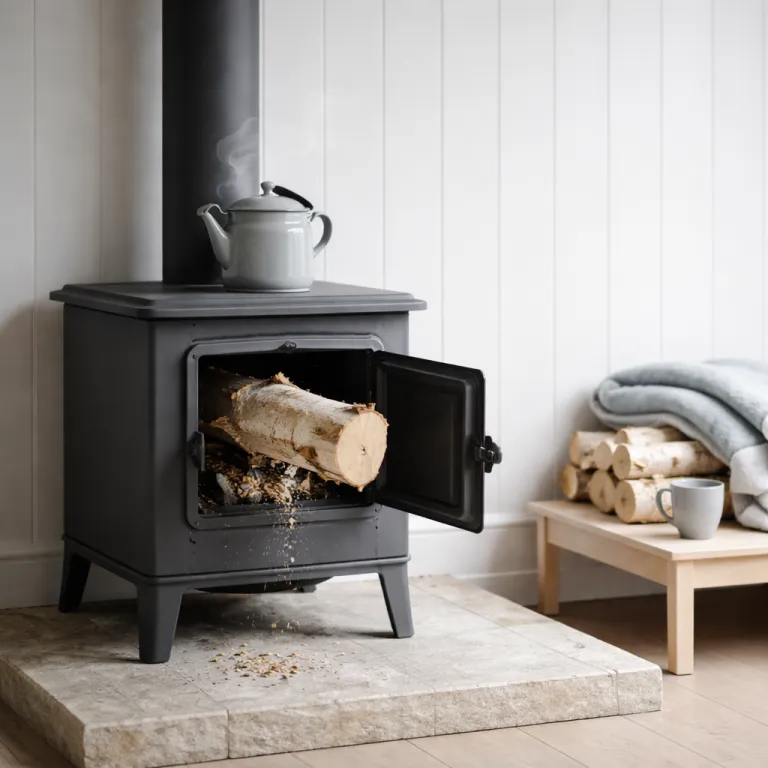
In high end cabins, the most memorable amenity is often the simplest: the quiet ten minutes you spend stacking log after log in the wood burner before dinner. Psychologists talk about effort based reward, and you feel it when a stove finally catches and the living room shifts from cold arrival to cozy ownership. That small ritual turns a generic rental into your own cabin retreat, at least for the weekend.
Thoughtful hosts design cabin fireplace details around this ritual, not just around heating efficiency. They provide a tidy rack of split firewood, clear instructions for safe wood burning, and a fire making kit that feels more like a welcome gift than a safety checklist. When the property leans contemporary, a sleek Jøtul wood stove or similar Scandinavian model can still deliver that hands on experience, especially if the log storage is integrated as a sculptural element beside the insert.
In more tropical or coastal retreats, such as a Caribbean cabin style villa, a gas fireplace or multiple gas inserts may take over from a traditional wood fire, but the ritual can remain. At places in the spirit of a refined Caribbean cabin style retreat, the host might light the gas burning fireplace for you at turndown, then leave extra decorative logs purely for scent and atmosphere. The point is not the fuel type; it is the sense that the room responds to your actions, whether you strike the match yourself or simply choose when the pellet stove or gas insert comes to life, with the glow captured in images labeled “gas fireplace in a luxury coastal cabin bedroom.”
Wood stove, gas fireplace, or pellet stove : what each choice signals
When you scroll through cabin listings, the type of fire appliance tells you almost as much as the view. A cast iron wood stove in the center of a log cabin signals self sufficiency, a place where you will carry log baskets, manage wood burning carefully, and probably fall asleep with the faint scent of smoke in your bedroom. A clean lined gas fireplace, by contrast, suggests a contemporary cabin where you tap a switch, enjoy instant flames, and never think about ash or kindling.
Pellet stoves sit somewhere between, offering real flames with a more controlled, eco minded profile that appeals to design conscious travelers. Hosts who choose a pellet heater often highlight sustainability, smart heating controls, and the precision of temperature in both living rooms and the main bedroom. For guests, that means you can still enjoy the look of a live fire without the variability of traditional logs, which matters if you are new to fire tending or arriving late at night.
Cabin fireplace design also extends to the supporting details that frame these choices. A rustic corner installation with rough stone and visible timber beams tells a different story than a suspended Jøtul unit in a white walled contemporary wood interior. If you are drawn to an elegant A frame escape in the woods, look for listings where the host has clearly photographed both the main stove in the living room and any secondary fireplace inserts in the bedroom, because that usually signals a property where fire is treated as a full house experience rather than a single decorative gesture, and where image alt text might read “suspended fireplace in a modern A frame cabin.”
Layout, materials, and how the fire shapes every room
Where the fire sits in the floor plan quietly dictates how you will move, talk, and rest during your stay. A centrally placed wood stove in the living room pulls everyone into a tight circle, turning even a spacious cabin into an intimate gathering space after dark. By contrast, a corner fireplace insert can leave the room feeling more open and flexible, better for couples who want both a cozy cabin atmosphere and space to spread out with books or laptops.
Experienced architects and interior designers working on premium cabins treat the fire as a structural decision, not just a styling choice. They know that stone and reclaimed wood are popular choices, and that using seasoned hardwood and proper insulation will maximize heat from a wood stove. They also understand that modern designs reduce emissions and improve efficiency, which matters when you are heating multiple living rooms and a bedroom suite without overwhelming the air quality; for example, a modern 7 kW stove in a well insulated 70–90 m² cabin can comfortably heat the main living area and an adjacent bedroom when correctly specified.
Materiality is where rustic and contemporary meet most gracefully. A log framed opening around a compact Jøtul stove can feel traditional, while a band of smooth concrete beneath a suspended fireplace reads as contemporary wood minimalism. When you browse curated collections of premium cabins in the woods, pay attention to how the fire is photographed relative to windows, seating, and dining; if the flames, the view, and the table form a triangle, you can expect long, slow evenings that feel perfectly paced, especially when images are described as “open plan cabin living room with central wood stove and forest view.”
Why fire photographs badly but reviews brilliantly
Scroll through cabin listings and you will notice something odd: the most atmospheric rooms often look flat in photos, especially around the fireplace. Camera sensors struggle with the contrast between bright flames and dark timber, so the stove or insert either blows out into white blobs or sinks into shadow. That is why a cabin that feels magical in person can look strangely ordinary online, even when the living room design is exceptional.
Guest reviews tell a different story, and they are remarkably consistent across rustic and contemporary properties. Travelers rave about falling asleep to the last embers in a corner wood burning stove, or about how a small pellet stove quietly kept the bedroom warm without drying the air. They mention the way a gas fireplace made a stormy night feel cinematic, or how tending a log fire in the main living rooms became the highlight of a romantic weekend.
For hosts and booking platforms, the lesson is clear: cabin fireplace design deserves more narrative than a single photo can provide. Listings that explain the fire experience in detail, from the type of stove to the layout of the room and the availability of extras like pre chopped log bundles, tend to convert better. When you read that a property has both a primary wood burning stove in the living room and secondary fireplace inserts in the bedroom, you can safely assume that the hushpitality ethos runs through the entire stay, not just the hero shot on the homepage, and that the listing likely uses descriptive image alt text to communicate that experience.
FAQ
What materials create the best balance of safety and style around a cabin fireplace ?
Stone, brick, and carefully treated timber are the most common materials around a wood fireplace or gas fireplace in premium cabins. Stone and reclaimed wood are popular choices, because they handle heat well while delivering a rustic or contemporary wood aesthetic. Look for hearths that extend at least 30 to 40 cm beyond the stove or insert, with non combustible surfaces protecting nearby living room flooring and bedroom thresholds.
How can I tell if a cabin’s wood stove will actually heat the space comfortably ?
Check the listing for the stove’s kilowatt rating and compare it with the cabin’s floor area in square metres. As a rule of thumb, many modern stoves deliver around 1 kW of useful heat for every 10–15 m² of well insulated space, assuming roughly 70 % average heating efficiency. For instance, a 5 kW EPA certified unit is typically suited to a compact 50–70 m² cabin. Reviews mentioning even heat in both living rooms and the bedroom are a strong sign that the stove and any fireplace inserts have been correctly specified.
Are wood burning stoves in cabins environmentally friendly ?
Modern certified wood burning stoves and pellet stoves are significantly cleaner than older models, thanks to improved combustion technology. Data from the United States Environmental Protection Agency (EPA), including its residential wood heater standards, show that newer EPA certified appliances can cut particulate emissions by more than 70 % compared with traditional, uncertified stoves. They use less firewood for the same heat output and produce fewer particulates, especially when guests burn only seasoned hardwood.
What should I look for in cabin photos to judge the quality of the fire experience ?
Focus less on the flames themselves and more on how the fireplace sits within the room. Notice whether seating in the living room is oriented toward the wood stove or gas insert, and whether there is safe clearance from textiles and timber walls. A well designed cozy cabin will usually show a clear path around the fire, visible log storage, and thoughtful lighting that lets the flames be the brightest point in the space, with images tagged along the lines of “stone fireplace with armchairs in a luxury cabin.”
Is a gas fireplace a downgrade compared with a traditional log fire in a luxury cabin ?
Not necessarily, especially in contemporary cabins where convenience and clean lines matter as much as ritual. A high quality gas fireplace can still create a cozy cabin atmosphere, particularly when paired with natural materials and good zoning between the living room and bedroom. If you value the hands on experience of tending logs, choose a property with both a wood burning stove and gas fireplaces, so you can decide night by night how involved you want to be.
Sources
Travel And Tour World; United States Environmental Protection Agency (EPA), residential wood heater standards and consumer guidance; National Cabin Association industry briefs; Christopher D. Lynn et al., “Heart Rate, Fire, and the Evolutionary Origins of Relaxation,” Evolutionary Psychology, 2014, doi:10.1177/147470491401200114.