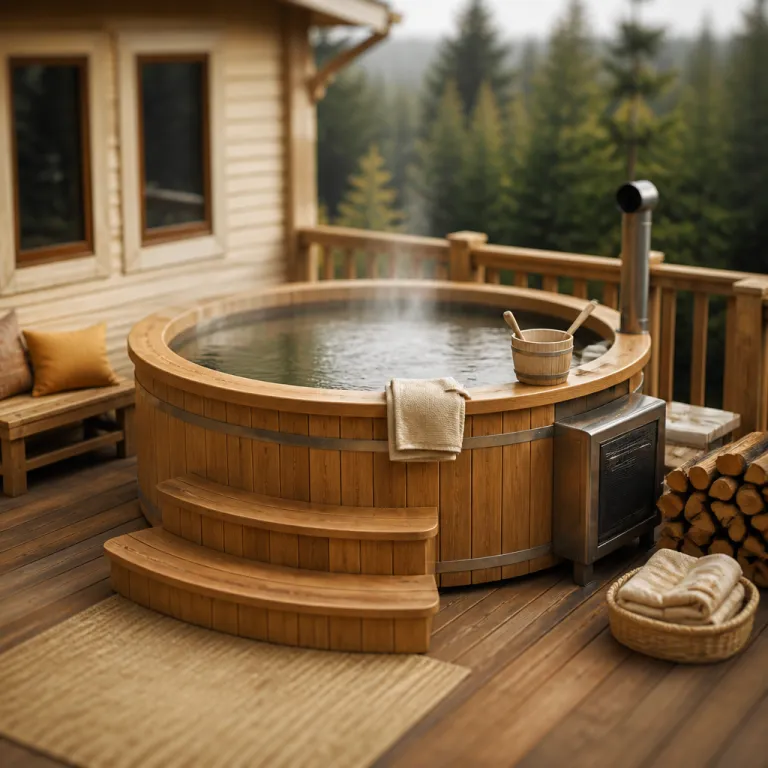
What a cabin wood-fired hot tub really is
A cabin wood-fired hot tub is, at its core, a deep soaking tub warmed by a small wood stove instead of an electric heater. The wood fired system uses a submerged or external stove where you feed burning logs, and the rising heat slowly transforms cold water into a steaming pool under the sky. The image that defines it is simple yet powerful, a round cedar vessel, a visible fire, and a plume of steam against crisp cold air.
Unlike a standard hot tub with jets and pumps, this is a silent ritual that asks you to participate in the heating process rather than press a button and walk away. You light the wood burning stove, manage the draft, and wait through the initial heat build up, usually between one and three hours of attentive tending before the soak is ready. That slower heat time is not a flaw but the defining rhythm, turning the cabin wood-fired hot tub into an evening’s main event instead of a background amenity.
Many premium cabins now specify the exact design of their tubs, from compact stainless steel barrels to generous cedar wood ovals that seat two or four guests. Brands such as Alumitubs have helped standardize expectations, pairing marine grade grade aluminum interiors with red cedar cladding for durability in harsh climates. When you read a listing that highlights a western red cedar hot tub wood shell or a fully welded stainless steel interior, you are looking at a cabin that understands this ritual as a centerpiece, not an afterthought.
Why the slow burn suits off-grid luxury
The appeal of a cabin wood-fired hot tub for couples is not only the soak but the shared act of building and tending the fire. You split or stack the wood, load the wood stove, and watch the burning hot flames lick around the stove chamber while the water slowly turns hot. That process aligns perfectly with cabins that prioritize woodsmoke, silence, and self sufficiency over resort style service.
Because there is no pump drawing from the grid, a wood fired hot tub fits cabins that run on solar, generator, or minimal infrastructure, especially in alpine or forest settings. The absence of mechanical jets means the only sounds are the crackle of fire, the occasional hiss of cold air meeting steam, and the quiet lap of water against tub wood walls. For couples used to urban wellness clubs and electric hot tubs, this stripped back design feels more elemental and, frankly, more romantic.
On curated platforms that specialize in elevated cabin stays, the cabin wood-fired hot tub has become a shorthand for serious off grid intent rather than decorative luxury. When you browse a guide to refined comfort in luxury cabins, the properties that stand out often pair a cedar tub with a small sauna or a simple cold plunge barrel for contrast. The best hosts lean into this thermal ritual, leaving clear instructions for managing heat time, suggesting ideal soaking windows, and sometimes pre stacking wood so your only task is to strike the match.
The honest trade offs of a wood-fired soak
Booking a cabin wood-fired hot tub means accepting that comfort comes with a slower, more hands on routine. Expect an initial heat phase of at least one hour, and up to three, depending on tub volume, outside temperature, and the efficiency of the wood burning stove. In deep winter, that heat time can stretch, especially if the water starts close to freezing or the tub wood has fully cooled between guests.
There is also no instant temperature control once the tub is burning hot, you regulate by adding cold water, opening the lid, or letting the fire die down. Couples who enjoy the process treat this as part of the charm, reading on the deck while the wood fired hot tub comes up to temperature, then slipping in when the balance between heat and air feels right. If you want a quick dip between activities, an electric hot tub with a thermostat and jets will always be easier.
Price is another consideration, because cabins with well specified tubs often sit at the premium end of the market. Hosts who invest in stainless steel interiors, western red cedar wood cladding, and insulated covers usually recoup that cost through higher nightly rates. For a clear sense of how these amenities influence pricing, look at curated breakdowns of cabin rentals with hot tubs and what drives the premium, then decide whether the ritual of a cabin wood-fired hot tub justifies the extra spend for your particular trip.
What to check in a listing before you book
Before committing to a cabin wood-fired hot tub stay, read the listing as carefully as you would a wine list. Start with the tub material, because cedar and cedar wood shells feel warm and aromatic, while stainless steel or grade aluminum interiors, such as those used by Alumitubs, offer easier cleaning and longer life. A hybrid design with a marine grade metal basin wrapped in red cedar or western red cladding often delivers the best balance of comfort and durability.
Next, confirm how the wood and stove are managed, because this shapes the entire experience from the first spark of fire. Some hosts provide seasoned wood and kindling beside the tub, while others expect you to source your own logs, which can be a challenge in remote areas or during cold snaps. Clear instructions on heating times, safe operation of the wood stove, and recommended water levels are non negotiable for a relaxing stay.
Privacy is the final filter, especially for couples planning a romantic soak under open skies. Look for listing photos where the cabin wood-fired hot tub sits away from shared paths, with a clean image of the view, whether that is forest, lake, or mountain. For a deeper sense of how thoughtful hosts integrate these details into the wider stay, consult insider guides on a premium cabin booking site that elevates your cabin vacation experience, then apply the same criteria to any listing you consider.
When and where a wood-fired tub shines
The cabin wood-fired hot tub earns its keep in cold seasons and high places. On a ridge top in the Rockies or a lakeside clearing in the Adirondacks, the contrast between icy air and burning hot water is the entire point of the ritual. You step across frost dusted boards, lift the lid, and sink into heat while your breath hangs in the night.
In these settings, hosts sometimes pair the main tub with a simple cold plunge barrel or a compact sauna, creating a full thermal circuit without a single pump or jet. Moving from hot cedar tubs to cold immersion and back again feels closer to a Scandinavian lakeside than a suburban spa complex. The cabin wood-fired hot tub becomes less an amenity and more a daily ritual, something you plan your hikes and dinners around.
Warm climate cabins can still justify a wood fired hot tub, especially at elevation where evenings drop sharply. In these regions, the initial heat phase may be shorter, and the heat time easier to manage, but the principle remains the same, you are trading instant convenience for a slower, more tactile experience. Couples who value that trade off tend to remember the crackle of wood burning and the color of the sky from the tub long after they have forgotten the thread count of the sheets.
This is a ritual, not a spa amenity
A cabin wood-fired hot tub is not a plug in wellness feature, it is a small ceremony that frames your stay. You carry logs, feed the fire, test the water, and decide when the heat feels right, which means you are present for every stage instead of arriving to a pre set temperature. That sense of participation is why many couples now seek out wood fired hot tubs specifically when they book.
From a practical perspective, the best cabins treat the tub with the same seriousness they give to their kitchen or bed. They choose durable materials such as stainless steel or grade aluminum interiors, specify a clear year warranty on the wood stove and fittings, and sometimes highlight perks such as free shipping on replacement parts to reassure guests about long term maintenance. When a host mentions a marine grade cedar hot tub or a carefully ventilated stove enclosure, you can usually trust that the rest of the cabin has been considered with similar care.
For travelers, the decision is simple, if you want jets, lights, and instant hot water, book a cabin with an electric hot tub. If you want the quiet satisfaction of tending a wood burning stove, watching the color of the flames shift as the tub warms, and stepping into the night wrapped in steam, then the cabin wood-fired hot tub is the signature you should look for. In that sense, the slow heat soak is less a trend and more a return to the kind of deliberate, hands on comfort that defines the most memorable cabin stays.
Key figures on cabin hot tubs and thermal rituals
- According to the Hot Tub Association of North America, roughly 60 % of new rural short term rentals now feature some form of hot tub or soaking tub, with wood heated models representing a fast growing niche in colder regions.
- Data from several major cabin rental platforms shows that listings with a private outdoor hot tub command on average a 15 % to 25 % nightly rate premium compared with similar properties without any tubs, especially in mountain and lakeside markets.
- Manufacturers of wood fired and wood burning hot tubs report typical heat time ranges from 60 to 180 minutes, depending on tub volume and outside temperature, which aligns with guest reports from alpine cabins and Nordic style retreats.
- Industry surveys indicate that guests staying in cabins with outdoor thermal features such as a sauna, cold plunge, or cabin wood-fired hot tub are significantly more likely to leave five star reviews, citing the ritual as a highlight of their trip.
FAQ about cabin wood-fired hot tubs
How long does a cabin wood-fired hot tub take to heat?
Most cabin wood-fired hot tubs require between one and three hours of heating time, depending on tub size, outside temperature, and the efficiency of the wood stove. Smaller tubs with insulated covers and sheltered positions will usually reach comfortable hot soaking temperatures faster. Hosts who know their setup well often provide specific guidance on expected heat time for different seasons.
What materials should I look for in a quality wood-fired tub?
High quality cabin wood-fired hot tubs typically use cedar wood or other durable softwoods for the exterior and either stainless steel or grade aluminum for the interior basin. Brands such as Alumitubs combine marine grade metal liners with red cedar or western red cladding to balance comfort and longevity. When a listing mentions a clear year warranty on the tub or stove, that is a strong indicator of build quality.
Is a wood-fired hot tub safe for first time users?
Yes, a cabin wood-fired hot tub is safe for first time users when the host provides clear instructions and maintains the stove correctly. Guests should follow guidance on water levels, initial heat management, and safe handling of burning wood around the tub. If a listing lacks detailed operating notes or photos of the wood burning system, ask the host for clarification before booking.
Can I use a wood-fired tub in warm weather?
A cabin wood-fired hot tub can be enjoyable in warm weather, especially in locations where evenings turn cold or where you can alternate with a cold plunge. In milder conditions, you simply shorten the heating phase and aim for a lower final heat level. Some couples even use the tub as a cool soaking pool by skipping the fire entirely during peak summer.
Why choose a wood-fired tub over an electric hot tub?
Travelers choose a cabin wood-fired hot tub when they value ritual, silence, and off grid independence over instant convenience. The wood fired system eliminates pumps and jets, reduces grid draw, and creates a more atmospheric experience centered on the visible fire and the scent of cedar. For many couples, that slower, more tactile process becomes the defining memory of their cabin stay, in a way that a standard electric hot tub rarely matches.